The Floating World
Works in this room
Japanese woodblock prints of the floating world: actors, courtesans, landscapes and the sea.
Section 1, north wall
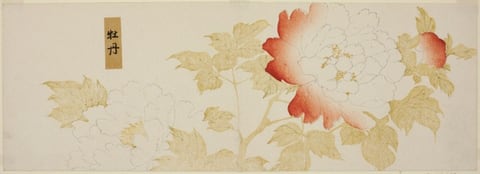
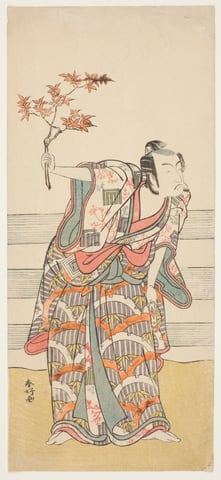
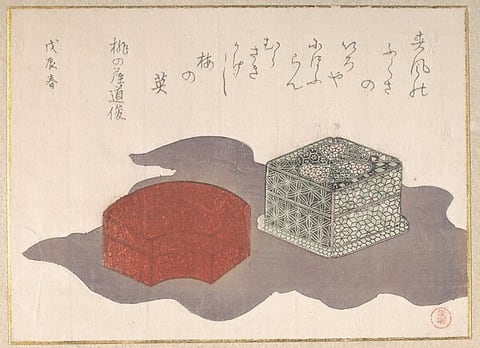
PeoniesKitagawa Utamaro, n.d.Courtesy of the Art Institute of Chicago Actor Ichikawa Monnosuke II in an Unidentified RoleKatsukawa Shunkо̄, About 1785Courtesy of the Art Institute of Chicago Incense Boxes with a Wrapping ClothKubo Shunman, 1808Courtesy of The Metropolitan Museum of Art
Section 1, south wall
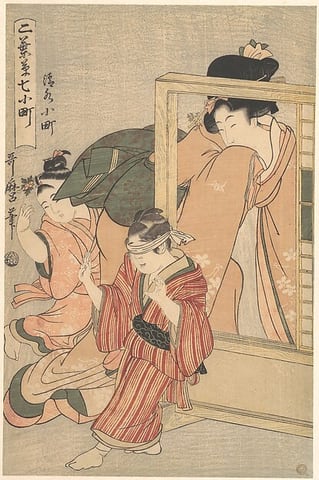
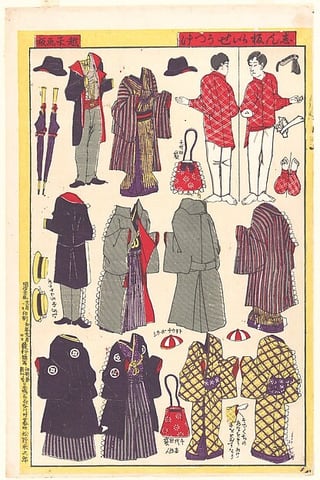
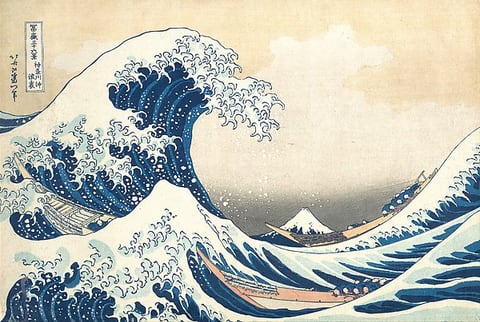
Kiyomizu Komachi, from the series Futabagusa nana KomachiKitagawa Utamaro, 1790sCourtesy of The Metropolitan Museum of Art Paper Doll ClothingUnrecorded Japanese maker, 1897–98Courtesy of The Metropolitan Museum of Art Under the Wave off Kanagawa (Kanagawa oki nami ura), also known as The Great Wave, from the series Thirty-six Views of Mount Fuji (Fugaku sanjūrokkei)Katsushika Hokusai, ca. 1830–32Courtesy of The Metropolitan Museum of Art
Section 2, south wall
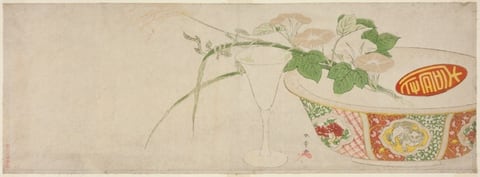
Plants, Porcelain Bowl, and Glass GobletKatsukawa Shunshō, c. 1789Courtesy of the Art Institute of Chicago 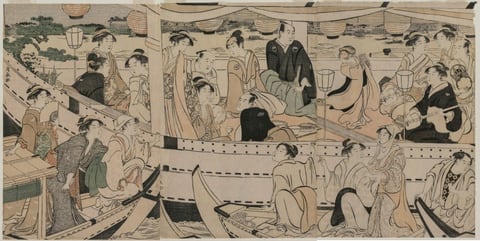
Boating Party on the Sumida RiverTorii Kiyonaga, 1789Courtesy of the Cleveland Museum of Art
Section 2, north wall
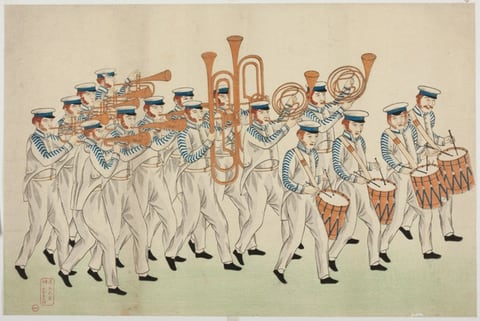
Procession of Russian Marching Band, from the Album of seven prints of Russian Army and Warship (Roshia seigi shashin kan), 1853Keiga, 1853Courtesy of the Art Institute of Chicago 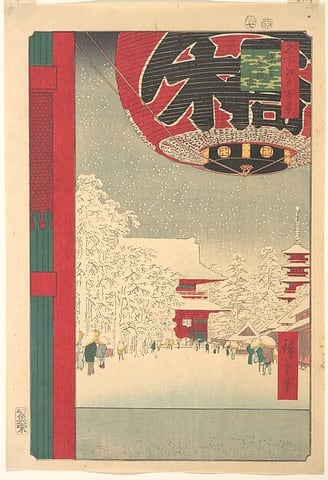
Kinryūsan Temple at Asakusa, from the series "One Hundred Famous Views of Edo"Utagawa Hiroshige, 1856Courtesy of The Metropolitan Museum of Art 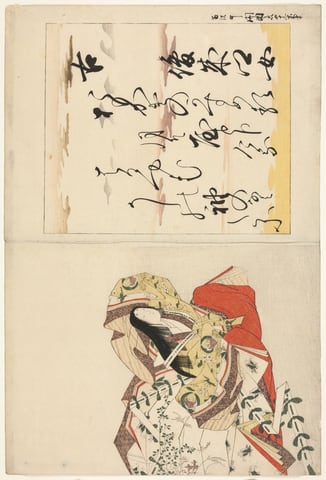
The Poetess Shunzei no Musume, from the series The Thirty-six Immortal Women Poets (Nishikizuri onna sanjurokkasen)Chôbunsai Eishi, Edo period (1615–1868), 1801Courtesy of the Art Institute of Chicago
Section 3, north wall
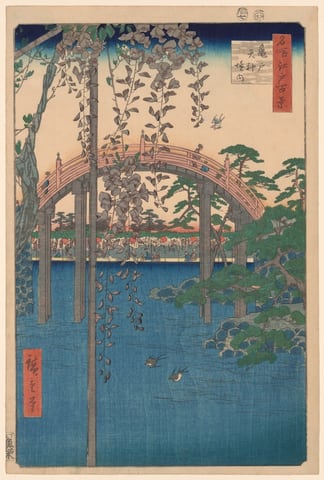
Precincts of Kameido Tenjin Shrine (Kameido Tenjin keidai), from the series "One Hundred Famous Views of Edo (Meisho Edo hyakkei)"Utagawa Hiroshige, 1856Courtesy of the Art Institute of Chicago 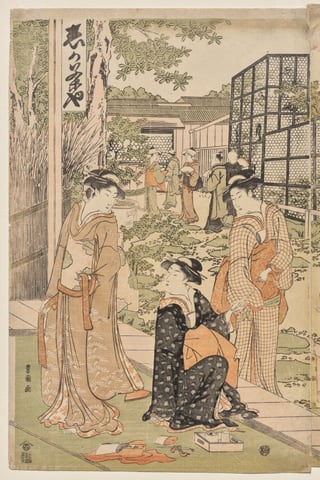
The Shika TeahouseUtagawa Toyokuni, early 1790sCourtesy of the Cleveland Museum of Art 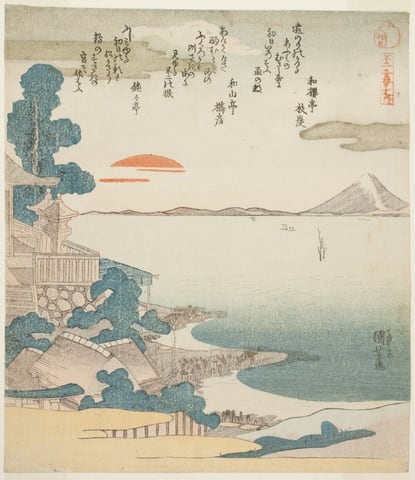
Dawn over Mout Fuji and Susaki, from the series "Five Views of Mount Fuji (Fuji goban no uchi)"Utagawa Kuniyoshi, c. 1827/29Courtesy of the Art Institute of Chicago
Section 3, south wall
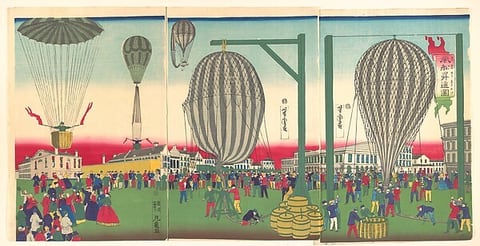
Illustration of a Balloon Ascending (Fūsen shōyō no zu)Utagawa Yoshitora, November, 1872Courtesy of The Metropolitan Museum of Art 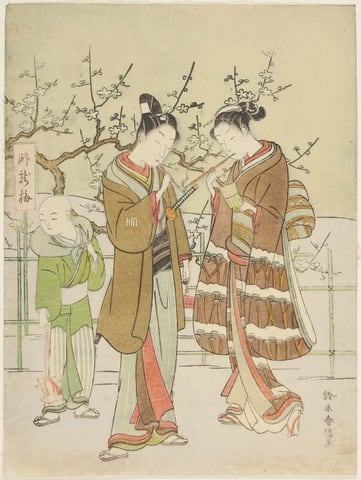
Giving a Light by the Garyubai Plum TreeSuzuki Harunobu, c. 1767/68Courtesy of the Art Institute of Chicago