The Floating World
Works in this room
Japanese woodblock prints of the floating world: actors, courtesans, landscapes and the sea.
Section 1, north wall
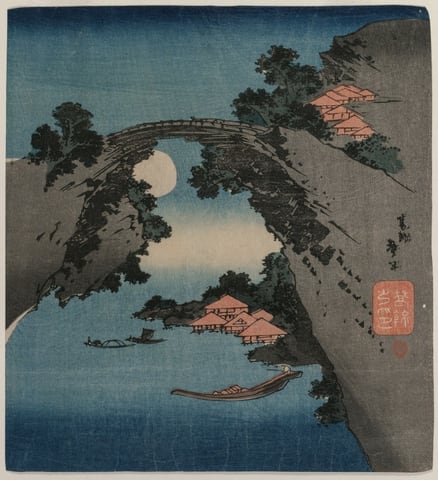
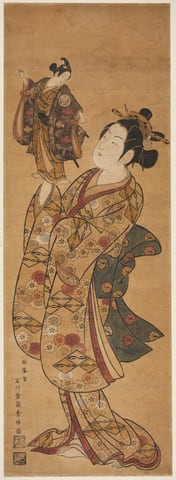
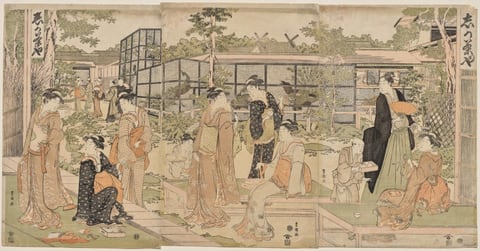
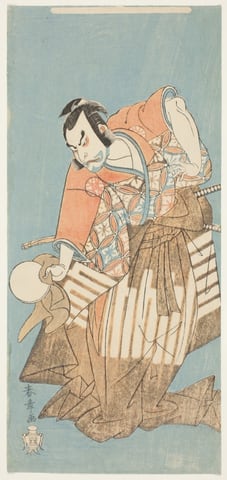
The Monkey BridgeKatsushika Taito II, early 1830sCourtesy of the Cleveland Museum of Art The Actor Onoe Kikugoro I holding a puppet of the Actor Sanogawa Ichimatsu IIshikawa Toyonobu, c. 1740sCourtesy of the Art Institute of Chicago The Shika TeahouseUtagawa Toyokuni, early 1790sCourtesy of the Cleveland Museum of Art
Section 1, south wall
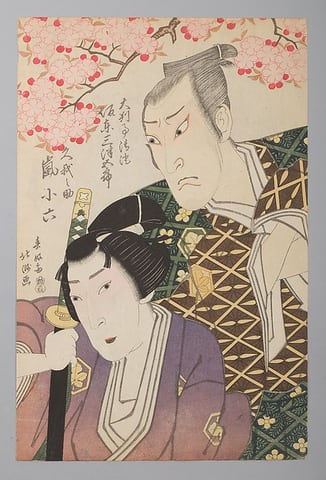
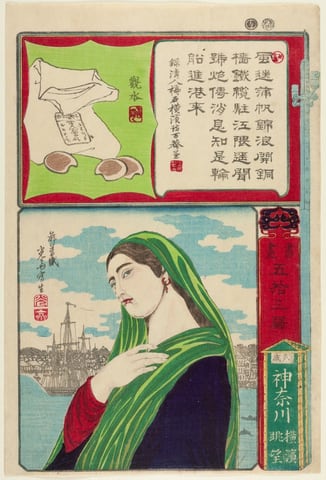
Bandō Mitsugorō III as Daihanji Kiyozumi and Arashi Koroku IV as KoganosukeShunkōsai Hokushū, 1821Courtesy of The Metropolitan Museum of Art Actor Nakamura Nakazô I as Osada no Tarô in The Genji Clan Now at Its Zenith (Ima o sakari suehiro Genji)Katsukawa Shunshō, About 1768Courtesy of the Art Institute of Chicago Kanagawa in Musashi Province: Distant View of Yokohama (Yokohama enbo), from the series Calligraphy and Pictures for the Fifty-three Stations of the Tokaido (Shoga gojusan eki)Utagawa Yoshimori, 1982Courtesy of the Art Institute of Chicago
Section 2, south wall
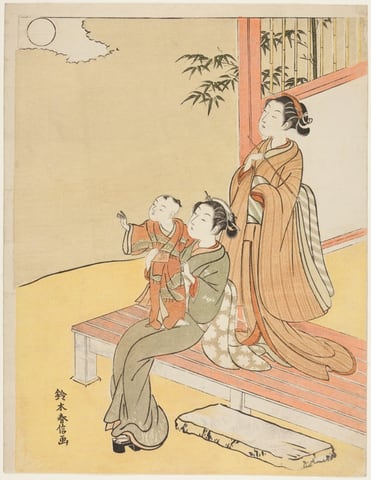
Viewing the MoonSuzuki Harunobu, c. 1767/68Courtesy of the Art Institute of Chicago 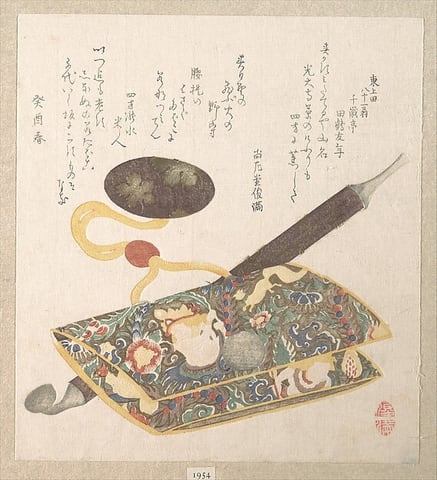
Tobacco Pouch and PipeKubo Shunman, 1813Courtesy of The Metropolitan Museum of Art 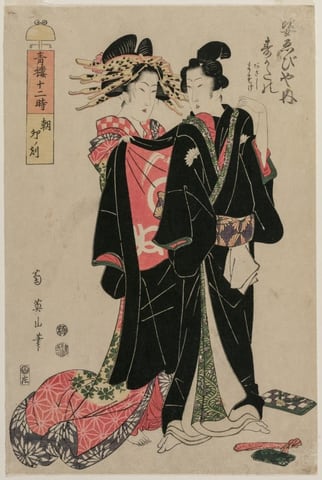
Sugatano of Sugata Ebisuya in the Morning, Hour of the Rabbit, from the series The Twelve Hours in the Pleasure QuartersKikukawa Eizan, 1812Courtesy of the Cleveland Museum of Art
Section 2, north wall
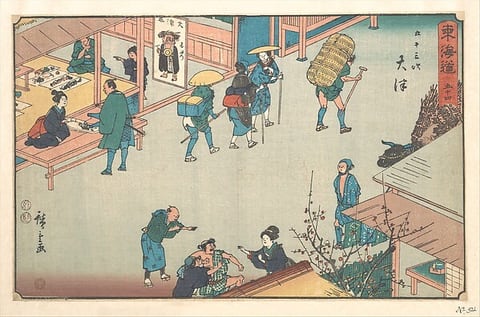
Ōtsu, from the series The Fifty-Three Stations of the Tōkaidō Road (Tōkaidō gojūsan tsugi, Ōtsu)Unrecorded Japanese maker, 1847–52Courtesy of The Metropolitan Museum of Art 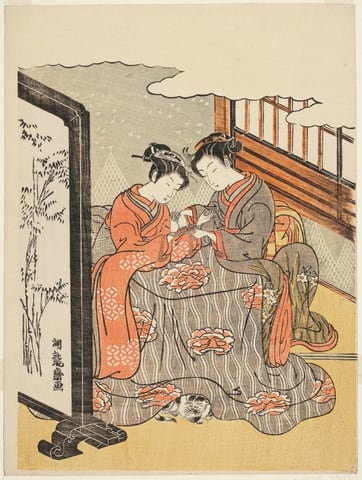
Two Young Women Playing Cat's CradleIsoda Koryusai, c. 1769Courtesy of the Art Institute of Chicago 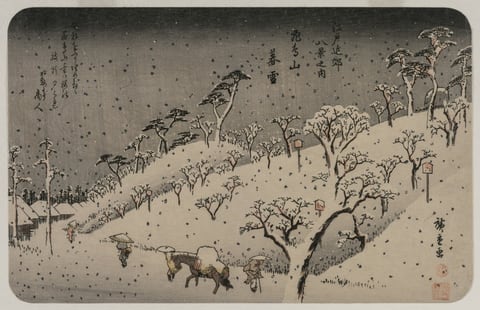
Evening Snow at Asuka Hill, from the series Eight Views of the Environs of EdoUtagawa Hiroshige, c. 1837–38Courtesy of the Cleveland Museum of Art
Section 3, north wall
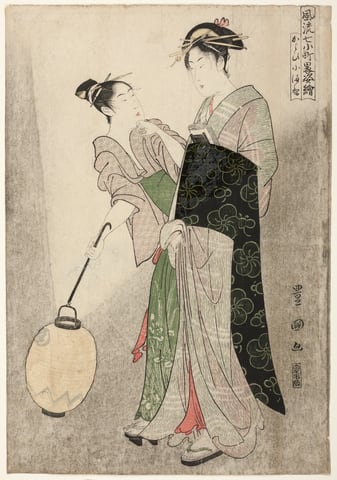
Courting Komachi (Kayoi Komachi), from the series Seven Fashionable Figures of Ono no Komachi (Furyu nana Komachi yatushi sugata-e)Utagawa Toyokuni, Edo period (1615–1868), about 1792Courtesy of the Art Institute of Chicago 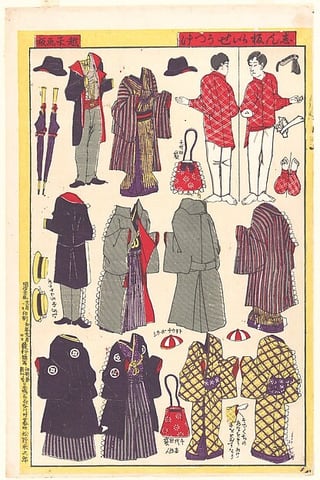
Paper Doll ClothingUnrecorded Japanese maker, 1897–98Courtesy of The Metropolitan Museum of Art
Section 3, south wall
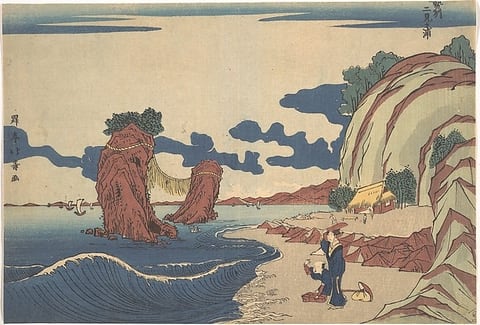
View of Futami Beach at IseShōtei Hokuju, ca. 1810–1820Courtesy of The Metropolitan Museum of Art 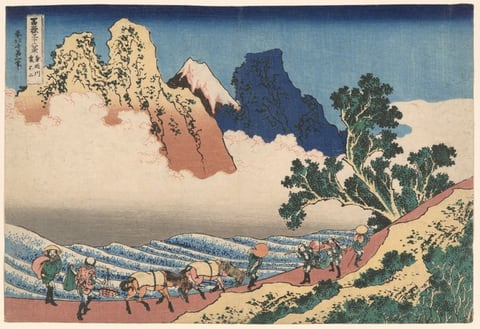
The Back of Mount Fuji Seen from Minobu River (Minobugawa Urafuji), from the series Thirty-Six Views of Mount Fuji (Fugaku sanjūrokkei)Katsushika Hokusai, 1830-33Courtesy of the Art Institute of Chicago